

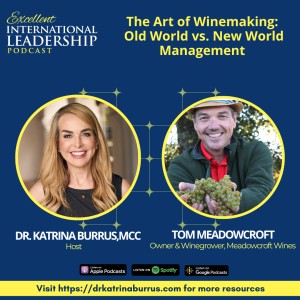
 The future of winemaking is moving towards quality over quantity. Both Tom Meadowcroft and Dr. Katrina Burrus acknowledged this shift in consumer preferences towards affordable luxuries and high-quality products.
The challenge lies in the differences between old world and new world winemaking practices.
In this podcast, Tom Meadowcroft, a viticulturist with his own winery in California discusses the evolving trends in the wine industry, emphasizing a shift towards quality over quantity.
He highlights the importance of leadership in the wine-making process, showcasing a collaborative approach in decision-making within a flat organizational structure. Tom also delves into the business aspect of winemaking, comparing the management styles between Europe and the United States.
Overall, the episode provides insights into the intersection of wine trends, leadership strategies, and business practices in the ever-changing world of winemaking.
A must-listen episode.
What You’ll Learn From this Episode
- Discover the benefits of the holistic European winemaking approach that combines viticulture and oenology, compared to the specialized American system.
- Learn about the differences between European and American leadership styles in the winemaking industry, and how collaboration and hierarchy influence decision-making.
- Explore the shift towards quality over quantity in the wine industry and understand how California’s position in the global market compares to regions like South America.
“I look at winemaking from the standpoint that people are gravitating towards quality, not quantity.” – Tom Meadowcroft
Topics Covered:
- 02:00 – Education Differences in Winemaking, Tom explains the differences between viticulture and oenology education in Europe and the U.S., emphasizing the integrated approach in Europe.
- 03:13 – Career Transition to Vineyard Management: Tom shares his journey from construction to managing vineyards in California for top wineries.
- 04:39 – Role of Vineyard Management Companies: Discussion on how companies bridge the gap between vineyards and winemakers in the U.S.
- 05:40 – Comparison of Old World and New World Winemaking: Contrasting traditional European land management with the innovative U.S. approach.
- 07:09 – Leadership Styles in Winemaking: Differences in leadership between European and American wineries.
- 10:00 – Employee Experience in Europe vs. U.S.: Tom reflects on his work experiences in European and American wineries, noting cultural and operational differences.
- 11:05 – Impact of Labor Laws on Winemaking: Recent changes in California labor laws and their effects on winemaking costs and schedules.
- 11:55 – Management Philosophy and Team Dynamics: Tom’s collaborative management philosophy and the importance of communication in his winery.
- 13:05 – Future of Winemaking and Global Competition: Positioning of California wines globally, competition with South America, and the shift towards quality over quantity.
- 14:05 – Influence of South American Wines: Predictions on the growth of South American wines in the U.S. market due to cultural ties and competitive pricing.
- 16:02 – Cultural Influences from Living Abroad: How Tom’s multicultural background from living in Switzerland has shaped his perspectives and management style.
- 19:58 – Where to Find and Purchase Tom’s Wines: Information on purchasing Tom’s wines online and navigating state alcohol regulations in the U.S.
Connect with Tom Meadowcroft
⦁ Website: https://www.meadowcroftwines.com/
⦁ Facebook: https://www.facebook.com/drinkmeadowcroftwines
⦁ Instagram: https://www.instagram.com/meadowcroft_wines/
Connect with Katrina Burrus
⦁ LinkedIn: https://www.linkedin.com/in/katrinaburrus/
⦁ Facebook: https://www.facebook.com/katrina.burrus
⦁ Twitter: https://twitter.com/katrinaburrus?lang=en
⦁ More Impactful Episodes at https://mkbconseil.ch/eil-podcast/
What are the leadership and industry challenges encountered in this episode
- Cultural Differences: One of the top international leadership challenges encountered in this episode is navigating and understanding cultural differences. Tom Meadowcroft discusses the differences between European and American winemaking practices, highlighting the importance of merging viticulture and oenology in Europe compared to the separation of these fields in the U.S. This cultural difference impacts decision-making processes, work hierarchies, and overall management styles.
- Labor Regulations: Another challenge is managing labor regulations and workforce scheduling differences between Europe and the U.S. Tom mentions the shift from a 60-hour work week to a 40-hour work week in California, which has increased costs and required adjustments in workforce management during harvest seasons. Understanding and adapting to labor laws and regulations in different regions can be a significant leadership challenge.
- Innovation and Creativity: The episode also touches on the differences in innovation and creativity between European and American winemaking approaches. While European wineries may have ingrained styles and traditions, American wineries have more freedom to experiment and create new wines. Balancing tradition with innovation and meeting consumer demands for quality and variety can be a leadership challenge in the international wine industry.
- Global Market Positioning: Lastly, the discussion on the future of winemaking in California compared to regions like South America highlights the challenge of positioning wines in a global market. Understanding consumer preferences, market trends, and competition from emerging wine regions like South America requires strategic leadership and market analysis to maintain a competitive edge in the international wine market.
Unveiling the Holistic European Winemaking Approach
The European winemaking approach, which merges viticulture and oenology, offers a holistic perspective on winemaking. This method, as discussed by Tom Meadowcroft, emphasizes the integration of vineyard management and wine production, creating a seamless connection between the land and the winemaking process.
Contrasting European and American Winemaking Systems
In Europe, the viticulture and oenology fields are intertwined, fostering a comprehensive understanding of winemaking. On the other hand, the American system tends to specialize in either viticulture or oenology, leading to a more segmented approach to wine production. Tom Meadowcroft highlights the benefits of the European model, emphasizing the finesse and refinement it brings to the winemaking process.
Leadership Styles in the Winemaking Industry
The differences in leadership styles between Europe and the United States in the winemaking industry are notable. While European wineries often follow a more hierarchical structure, American wineries lean towards a flatter organizational approach. Tom Meadowcroft underscores the collaborative nature of decision-making in the U.S., where input from team members is valued before final decisions are made.
Embracing Quality in the Wine Industry
The wine industry is experiencing a shift towards quality over quantity, with consumers gravitating towards premium wines. Tom Meadowcroft discusses how this trend is influencing the production and consumption of wines globally. The focus on quality wines reflects a broader consumer preference for affordable luxuries and exceptional products.
California’s Position in the Global Wine Market
California’s wine industry holds a prominent position in the global market, attracting attention from wine enthusiasts worldwide. Tom Meadowcroft highlights California’s abundance of skilled workers, robust economy, and innovative winemaking practices as key factors contributing to its success. The state’s wines are highly sought after internationally, with a reputation for quality and approachability.
Comparing California to South America in the Wine Market
While California remains a dominant player in the global wine market, regions like South America, particularly Argentina, are emerging as significant contenders. Tom Meadowcroft predicts a bright future for South American wines, citing their growing popularity among consumers. The diverse offerings from South America cater to a wide range of preferences, positioning the region as a key player in the wine industry.
Conclusion
The insights shared by Tom Meadowcroft shed light on the nuances of winemaking practices, leadership styles, and market trends in the wine industry. Understanding the holistic European approach, the collaborative American system, and the evolving landscape of quality-driven wine production provides valuable perspectives for wine enthusiasts and industry professionals alike.